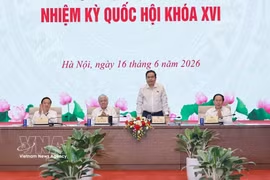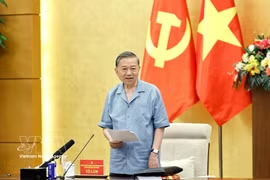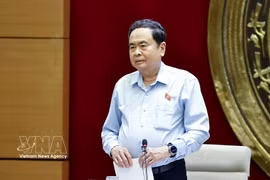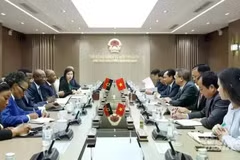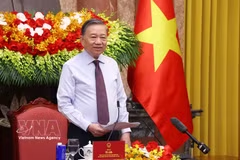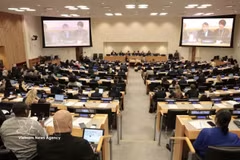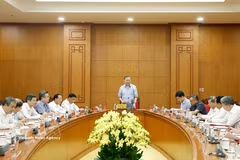
Hanoi (VNA) – With a spirit of urgency, proactiveness and high sense of responsibility, the conference on the implementation of the legislative orientation for the 16th National Assembly (NA) concluded its full agenda on the morning of June 16.
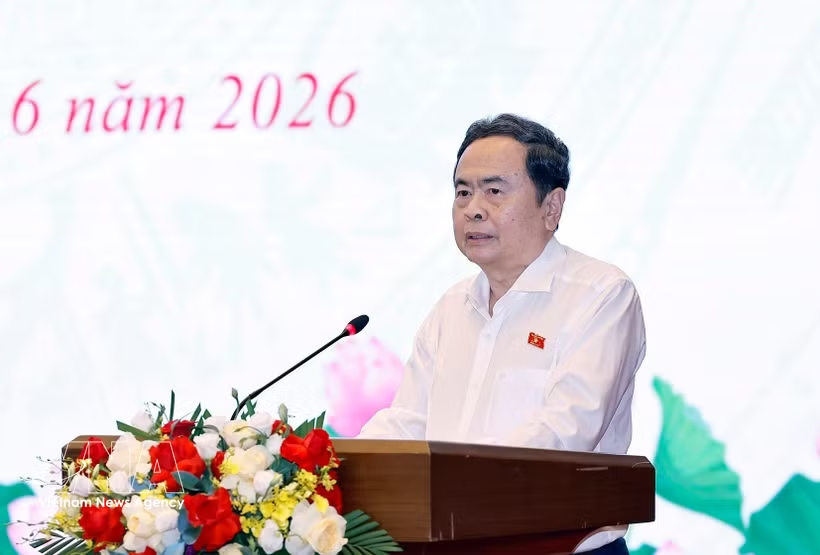
Delivering closing remarks, NA Chairman Tran Thanh Man stated that the 16th term faces an extensive legislative workload, comprising 192 law-making tasks, the majority of which will be led by the Government.
The objective is to thoroughly address the shortcomings of the previous tenure while continuing to renew thinking, working methods and approaches, and to strongly apply digital transformation and artificial intelligence. Legislative work must go hand in hand with tighter control of power, greater accountability, and anti-corruption efforts, with group interests and local interests not allowed, he stressed.
According to the top legislator, the NA has in recent years significantly reformed its legislative approach by ensuring that laws regulate only matters falling within the legislature’s authority, while more detailed provisions are delegated to the Government and ministries to improve flexibility and responsiveness.
He noted that legislative activities during the 15th term achieved important results, most notably a shift in legislative thinking – strongly moving from a reactive approach driven by practical developments to a proactive, methodically planned legislative agenda supported by new procedures, modern methods and greater use of technology, resulting in the passage of a substantial number of laws and resolutions.
However, he acknowledged several remaining shortcomings, including delays in preparing some draft laws, the need to revise certain newly adopted legislation, and delays in issuing documents guiding enforcement.
Chairman Man said that from now until the end of 2026, 61 legislative tasks have already been included in the 2026 law-making programme; 39 tasks are to be completed in 2027 for inclusion in the 2028 programme; 26 tasks in 2028 for the 2029 programme; and 14 tasks in 2029 for the 2030 programme. Additional urgent and important matters pointed out by the Party General Secretary and State President will also need to be institutionalised through legislation.
He called for meaningful consultation with affected stakeholders and stronger oversight of the issuance of guidance regulations and the enforcement of laws. Relevant bodies should proactively identify legal bottlenecks emerging during implementation and promptly propose amendments, supplements or repeals where necessary.
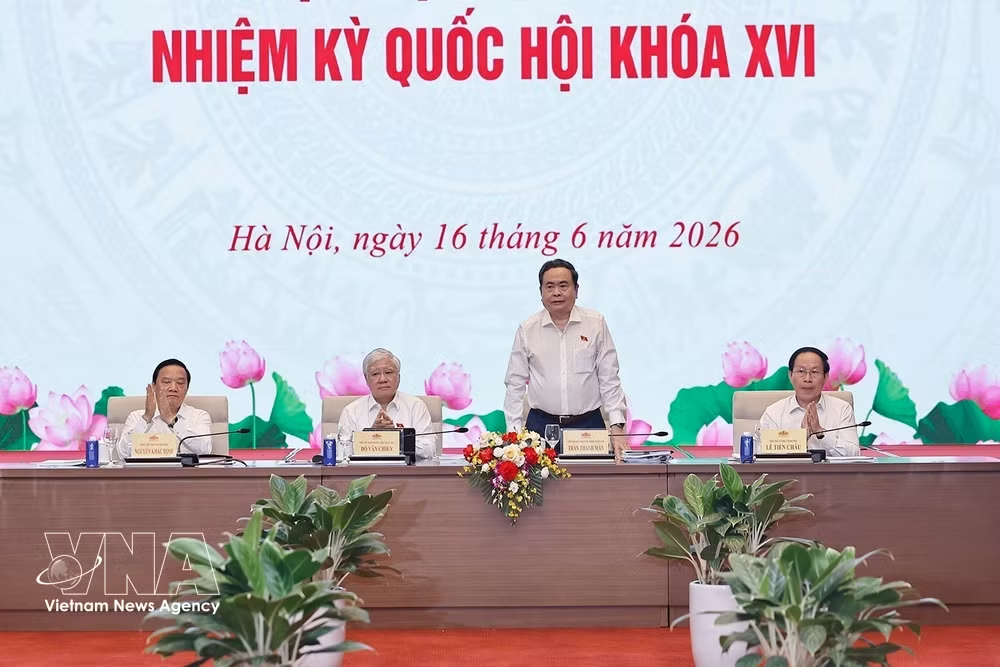
Addressing the conference, Deputy Prime Minister Le Tien Chau said the Government had been assigned the responsibility for 171 of the 192 legislative tasks.
Describing the assignment as both a major responsibility and an opportunity for substantive reform in law-making, he said the Government views law-making as a central political task for ministries and sectors, and as a key instrument for removing bottlenecks, unlocking resources, fostering development and improving national governance.
In that spirit, the Government will promptly issue and implement its plan to realise the legislative orientation of the 16th NA. He added that legal reform will continue to embrace new thinking, ensuring that legislation paves the way for development, supports innovation and economic activities, and decisively moves away from the mindset that “what cannot be managed should be prohibited”.
The Government will also strengthen internal discipline, accelerate digital transformation in both law drafting and enforcement, and enhance coordination with the NA, noted the Deputy PM./.