Draft circular aims to promote responsible use of technology, AI in higher education

Once issued, the circular is expected to provide a key legal basis for promoting responsible technology adoption, advancing digital transformation and AI in higher education, while strengthening quality assurance, data protection and academic integrity in the digital era.

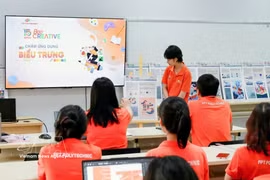
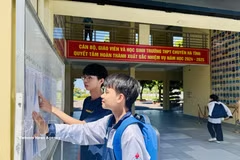
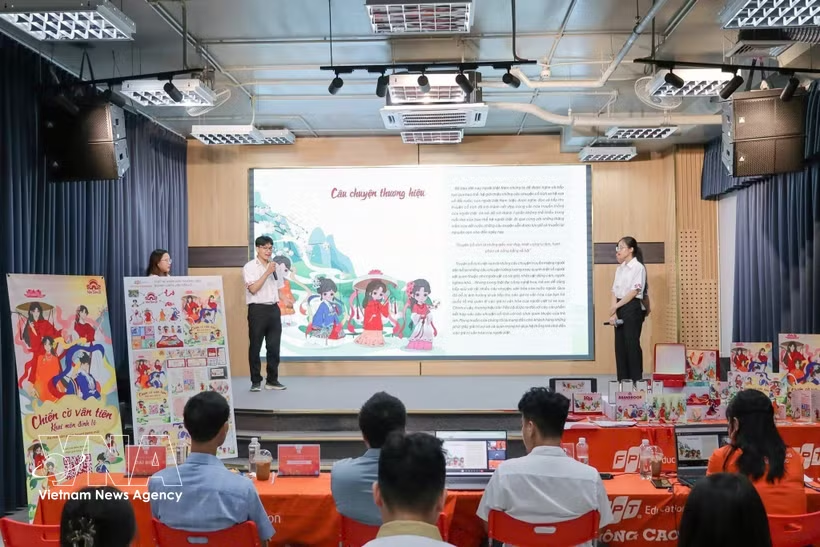
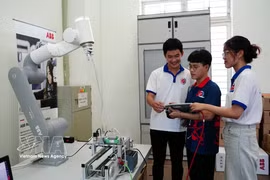
Students at FPT Ha Nam Inter-level School practice their lessons by applying digital technology software. (Photo: VNA)

Hanoi (VNA) – The Ministry of Education and Training has released a draft circular on the application of technology in higher education for public consultation, aiming to establish a unified legal framework for deploying digital technologies, artificial intelligence (AI) and related solutions across the sector.

The draft applies to higher education institutions, organisations and individuals involved in teaching, research, management and support services, as well as enterprises providing digital platforms and AI solutions.

Under the draft, technology adoption will be implemented comprehensively across training, assessment, research, institutional governance and student services. Universities may proactively select suitable technological solutions aligned with their development strategies and conditions, while ensuring controlled implementation and academic integrity.

In training activities, institutions may apply digital technologies and AI through various modes, including technology-assisted in-person teaching, fully online learning, blended learning, and data- and AI-driven personalised education. These applications are intended to support teaching organisation, learning management, progress tracking, academic advising, career guidance, and data analytics to improve curricula and teaching methods.

The draft emphasises that AI must serve as a support tool rather than replace lecturers, ensuring transparency, accountability, and compliance with academic integrity standards without distorting learning outcomes.
vnanet-potal-dai-hoc-so-ung-dung-ai-mo-duong-doi-moi-giao-duc-dai-hoc-8304021.jpg
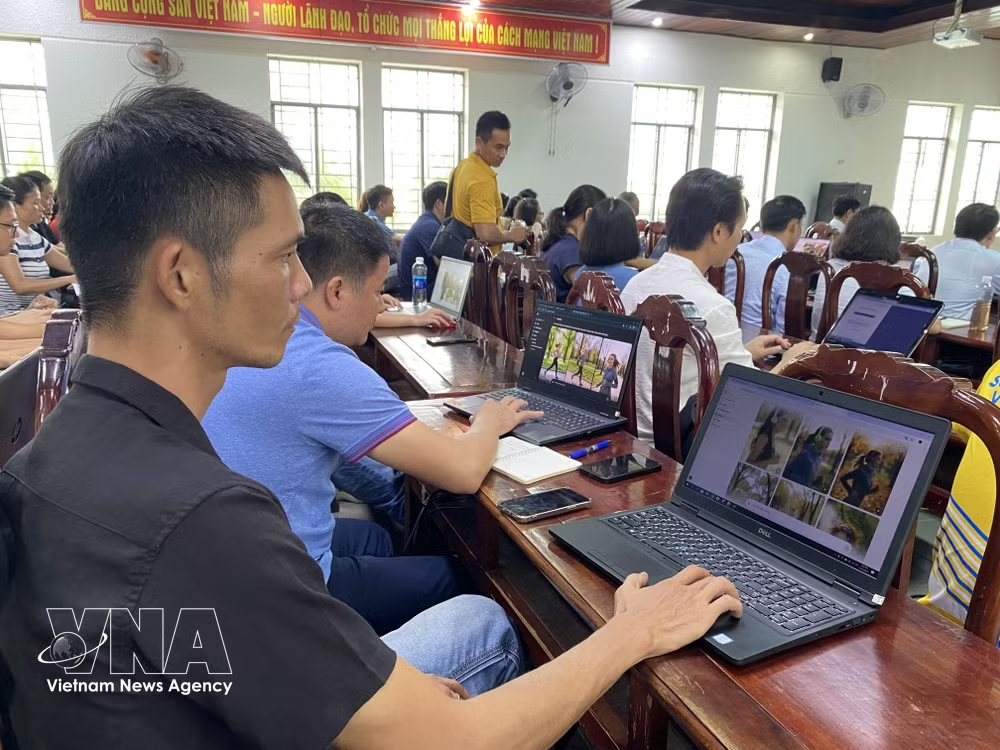
An AI training course for lecturers at Da Nang University of Physical Education and Sports (Photo: VNA)

For testing and assessment, higher education institutions are permitted to use digital technologies and AI provided they ensure accuracy, objectivity, transparency and fairness, in line with programme learning outcomes. Applications may include question bank development, exam administration and grading, monitoring assessment processes, analysing learning outcomes and competencies, and managing assessment data.

The draft also requires strict identity verification of learners, robust monitoring mechanisms, and the integrity, traceability and secure storage of assessment data. Institutions must publicly disclose assessment criteria and provide mechanisms for explanation and review of results. The use of AI in assessment must likewise support, not replace, academic roles and must not compromise evaluation integrity.

A key component of the draft is the emphasis on safeguarding academic integrity in digital environments. It stipulates that the use of digital technologies and AI in teaching, assessment and research must ensure honesty, objectivity and transparency, respect intellectual property rights, and accurately reflect learners’ capabilities and research outcomes.

Violations include using AI for cheating, plagiarism, unauthorised use of materials, falsifying data, outsourcing academic tasks, or failing to disclose AI use when required.

Higher education institutions must establish internal regulations, define violations and handling procedures, implement monitoring systems, and raise awareness of academic integrity.

In governance, the draft calls for comprehensive digital transformation, with data serving as the foundation for management and decision-making, ensuring transparency and accountability. Institutions are required to develop integrated, standardised and secure data systems to support administration, teaching, research, forecasting and AI applications.

It also requires synchronised digital infrastructure and stronger digital and AI competencies among students, lecturers and administrators.

Once issued, the circular is expected to provide a key legal basis for promoting responsible technology adoption, advancing digital transformation and AI in higher education, while strengthening quality assurance, data protection and academic integrity in the digital era./.
VNA

See more

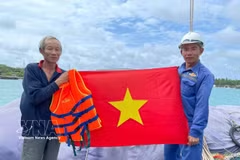
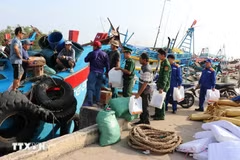
The naval force presents the national flag to a fisherman. (Photo: VNA)

Vietnam Fisheries Society protests China’s unilateral fishing ban in East Sea

The society stressed that the ban is unilateral and unjustified; seriously infringes upon Vietnam’s sovereignty, rights and legitimate interests; violates international law, including the 1982 United Nations Convention on the Law of the Sea (UNCLOS); and runs counter to the Declaration on the Conduct of Parties in the East Sea (DOC).

Tay Ninh Cao Dai Holy See, located in Long Hoa ward, Tay Ninh province, is regarded as the spiritual centre of Cao Dai. (Photo: VNA)

📝OP-ED: Freedom of belief and religion in Vietnam cannot be distorted

According to the Ministry of Ethnic and Religious Affairs, more than 95% of the population engage in religious or belief-related activities. A total of 43 organisations representing 16 religions have been officially recognised and granted registration certificates, with nearly 28 million followers.

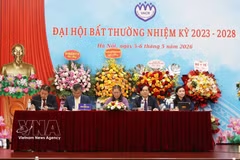
The Vietnam Association for Protection of Child Rights (VACR) holds an extraordinary congress in Hanoi on May 5-6. (Photo: VNA)

Child rights association puts online safety at forefront

Since the start of the tenure, the Vietnam Association for Protection of Child Rights (VACR) has mobilised more than 250 billion VND (9.5 million USD) in cash and goods to support about 235,000 children nationwide. It also reported legal counselling in nearly 140 child abuse and rights violation cases.

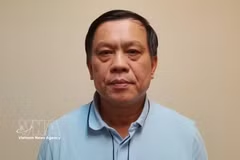
Former Minister of Health Nguyen Thi Kim Tien (Photo: VNA)

Former health minister to stand trial on May 20

According to the indictment, former Minister of Health Nguyen Thi Kim Tien and six accomplices allegedly caused losses of more than 803 billion VND (30.5 million USD) through unnecessary hiring of foreign consultants, disbursements during project suspension periods, and improper financial support to businesses.

Officers and soldiers of the Hai Phong Border Guard assist a Chinese fishing vessel in securing its moorings while awaiting favourable weather conditions for being towed into the harbour shelter. (Photo: VNA)

Vietnamese border guards rescue two foreign fishing vessels in distress at sea

The prompt and successive rescue of the two foreign vessels underscores the professionalism and responsibility of Vietnam’s Border Guard force in safeguarding maritime sovereignty and security. It also serves as a clear demonstration of Vietnam’s commitment to promoting a peaceful, friendly, and humanitarian maritime environment in line with international law and practices.

Construction site of Tu Lien bridge, along Nghi Tam Street (Photo: VNA)

Hanoi accelerates seven Red River bridge projects, many exceed 70% completion

ccording to the municipal Transport Construction Investment Project Management Board, the city is simultaneously implementing seven projects, namely Tu Lien, Ngoc Hoi, Tran Hung Dao, Thuong Cat, Van Phuc, Hong Ha and Me So bridges. Construction is being carried out on multiple fronts, focusing on bored piles, pile caps, piers and superstructure works.

Border guards of Dong Thap province present gifts and raise awareness on IUU fishing prevention for fishermen at Vam Lang fishing port, Gia Thuan commune, Dong Thap province. (Photo: VNA)

Dong Thap tightens fishing control to curb IUU fishing

The southern province has ensured 100% of fishing vessels are registered, licensed, and equipped with vessel monitoring systems (VMS). Authorities have strengthened inspections, particularly targeting vessels that lose tracking signals or fail to meet operational conditions.

Visitors tour Dien Bien Phu Victory Museum (Photo: VNA)

Dien Bien battlefield legacy powers tourism revival

Seventy-two years after the Dien Bien Phu Victory, its legacy still reverberates. The unity, self-reliance, and resilience forged in that historic triumph remain a powerful internal engine, now propelling Dien Bien toward fast and sustainable development.

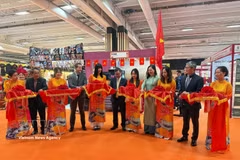
Delegates cut the ribbon to inaugurate the Vietnam Pavilion at Foire de Paris. (Photo: VNA)

Vietnam space opens at Foire de Paris

The opening ceremony featured vibrant performances, including a traditional lion dance and musical showcases with the monochord (dan bau) and T’rung bamboo instrument, offering visitors an immersive introduction to Vietnamese culture. The festive atmosphere was further enhanced as lion dance troupes paraded through the Vietnamese exhibition area.

Vietnam’s fertility drops below replacement in recent years, from 2.11 children per woman in 2021 to 1.91 in 2024 and 1.93 in 2025, especially in major cities and more developed regions. (Photo: VNA)

Health ministry targets annual fertility rate of 2% by 2030

Vietnam’s fertility has dropped below replacement in recent years, from 2.11 children per woman in 2021 to 1.91 in 2024 and 1.93 in 2025, especially in major cities and more developed regions, prompting the need for coordinated measures to encourage childbirth.

The Hoa Binh 1 and 2 wind power plants in Vinh Hau commune, Ca Mau province generate around 400 million kWh annually, contributing to the country’s energy security (Photo: VNA)

Vietnam’s energy transition on track, poised to become regional power hub: Malaysian expert

Vietnam is entering the most challenging phase—from planning to execution—where financial, infrastructural and governance challenges are all surfacing at once. Yet this stage also clarifies opportunities. If the country can overcome systemic bottlenecks and balance security, transition and cost considerations, it has the potential to emerge as a key energy pillar in Southeast Asia.

The Vietnam Education Publishing House is working to supply textbooks to localities (Photo: VNA)

Vietnam picks one textbook set for all schools, targets free books by 2030

The Ministry of Education and Training has selected the “Ket noi tri thuc voi cuoc song” (Connecting Knowledge with Life) series, published by state-owned Vietnam Education Publishing House (VEPH), from among three existing sets. The education minister approved the choice on December 26, 2025, locking in enough time for preparation before the new school year.