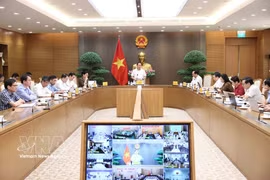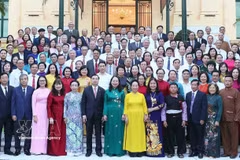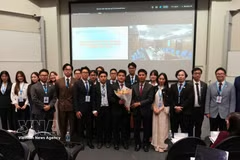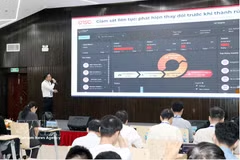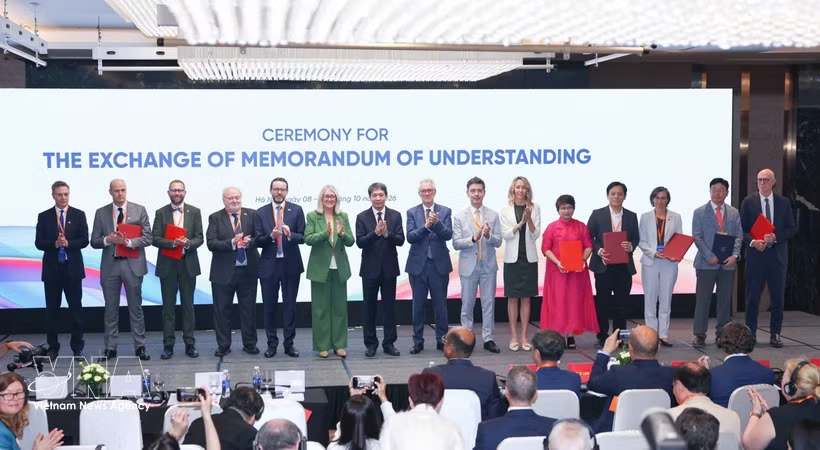
Hanoi (VNA) – The International Conference on Education Cooperation in the Digital Era opened in Hanoi on October 8, bringing together more than 800 delegates from 40 countries and territories.
The two-day event aims to advance major policies on breakthroughs in science, technology, innovation and national digital transformation, education and training, as well as international integration in the new situation.
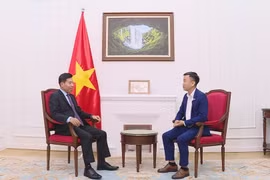
Addressing the opening session, Minister of Education and Training Hoang Minh Son said digital technology and artificial intelligence (AI) are creating major opportunities for education while posing global challenges related to information reliability, ethics, copyright, data security, academic integrity and the digital divide.
Against this backdrop, education cannot simply focus on what additional skills learners need, he said, stressing that teachers, schools and the entire education system must also change to not only adapt to AI but gradually master and guide its use for human development.
Learners need to develop self-learning capacity, independent and critical thinking, creativity and the ability to work with AI, while teachers should move beyond knowledge transmission to designing learning activities, guiding and inspiring students, and shaping values. Schools and education authorities must likewise innovate management, assessment and quality assurance.
For Vietnam, people development remains the overarching goal of education reform, the minister said, stressing that the value of technology lies not in how much it is used but in whether it helps learners progress, enables teachers to perform their roles better, improves school efficiency and expands equitable access to learning.
He outlined four priorities for Vietnam’s digital transformation in education: building a secure and interoperable digital infrastructure and data platform; renewing teaching and learning while developing digital and AI capabilities among learners and teachers; promoting safe, transparent and responsible AI use in education governance; and strengthening international cooperation in digital technology and AI.
The minister stressed that AI-related opportunities and challenges transcend national borders, making international cooperation essential. Countries should move beyond knowledge transfer and technology adoption to jointly research, develop, test and share solutions.
Stefaan Hermans, Director of Policy Strategy and Evaluation at the European Commission’s Directorate-General for Education, Youth, Sport and Culture, said digital transformation in education is not merely about platforms, devices or AI, but fundamentally about people, institutions and how knowledge is created, shared and applied.
He noted that the EU is implementing various programmes to promote cooperation with Vietnam in education, research and skills development. Since 2021, Erasmus+ has supported more than 6,800 student and staff exchanges between Europe and Vietnam, while Vietnamese educational institutions have participated in nearly 100 capacity-building projects. Vietnamese organisations and researchers are also involved in 29 Horizon Europe projects.
Noting that the EU’s priorities closely align with Vietnam’s orientations set out in Resolutions No. 57, 59 and 71, Hermans affirmed that the EU stands ready to work with Vietnam, leverage European strengths in support of the country’s development priorities, and translate shared goals into concrete cooperation programmes and outcomes.
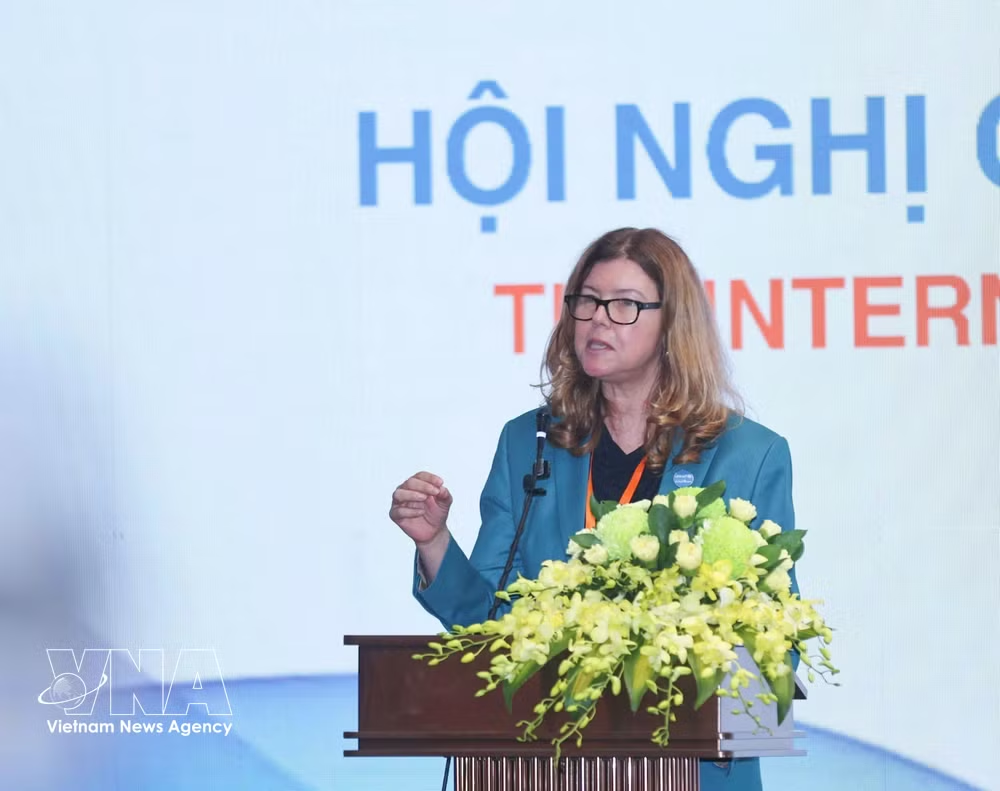
UNICEF Representative in Vietnam Silvia Danailov emphasised that education is central to Vietnam’s next stage of development, when growth will increasingly rely on innovation, technology, green transformation and a highly skilled workforce.
She stressed that technology must be designed to ensure equitable learning opportunities, particularly for children in disadvantaged areas, ethnic minority children, children with disabilities and other vulnerable groups. The rights, safety and protection of children must also be built into digital and AI systems from the outset.
The conference features thematic sessions on international cooperation, digital transformation in general education, internationalisation and digitalisation in higher education, the digital ecosystem in vocational education, and a global alliance initiative for children.
More than 70 exhibitors are showcasing AI, digital learning platforms, personalised education, STEM, educational data, simulation technology and solutions supporting teachers, schools and learners at the Education & Edtech Exhibition on October 8-9.
Minister Son called on educational institutions to identify practical challenges while businesses, scientists and international partners work together to develop concrete solutions. The Ministry of Education and Training will continue supporting these partnerships so that connections made at the conference and exhibition can be transformed into substantive programmes benefiting learners, teachers and society./.