High-tech FDI attraction set as strategic priority: official

The resolution sets out a number of specific targets for foreign investment attraction during the 2026–2030 period. Annual registered FDI is targeted at between 40 billion USD and 50 billion USD, while realised capital is expected to reach approximately 30–40 billion USD per year.

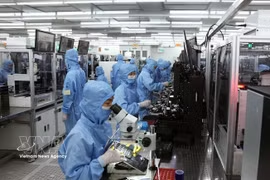
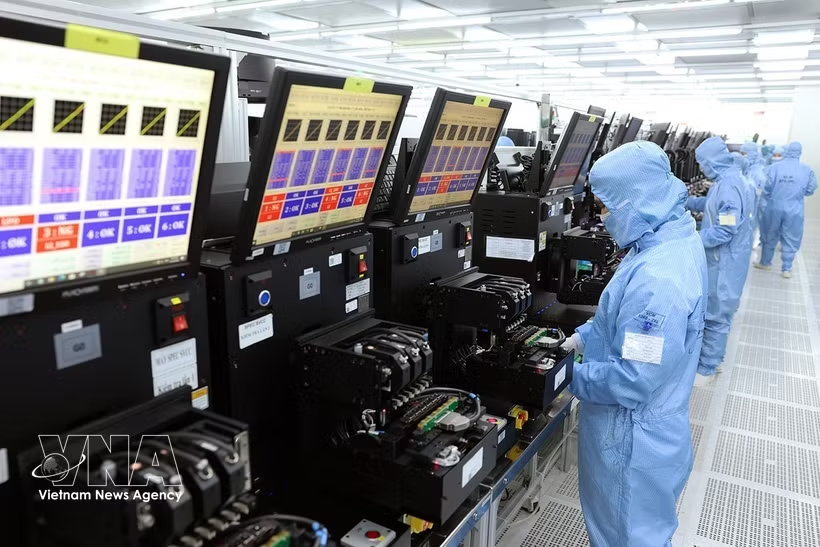
Production line for camera modules and electronic components at the factory of the Korean-invested MCNEX VINA Co., Ltd, located in Phuc Son Industrial Park, Ninh Binh province. (Photo: VNA)

Hanoi (VNA) – In the coming period, Vietnam will prioritise attracting high-tech foreign direct investment (FDI) projects with strong innovation content, significant potential for technology spillover, and the ability to build closer linkages with domestic enterprises, an official has said, describing this as a key direction in the country’s next-generation foreign investment strategy.

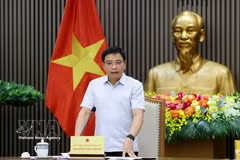
Speaking at a regular press briefing for the second quarter of 2026 held in Hanoi on 17 June, Nguyen Thi Huong, Deputy Director General of the Ministry of Finance’s Foreign Investment Agency, discussed Resolution No. 10-NQ/TW on developing the foreign-invested economic sector, issued by the Politburo on June 8.

She said the resolution is the outcome of a comprehensive process of research, review and assessment of the role played by the sector in the national economy.

According to Huong, the resolution sets out a number of specific targets for foreign investment attraction during the 2026–2030 period. Annual registered FDI is targeted at between 40 billion USD and 50 billion USD, while realised capital is expected to reach approximately 30–40 billion USD per year.

Notably, around 75% of foreign investment inflows are expected to come from developed economies and partners with advanced technologies, strong innovation capabilities and modern governance standards.
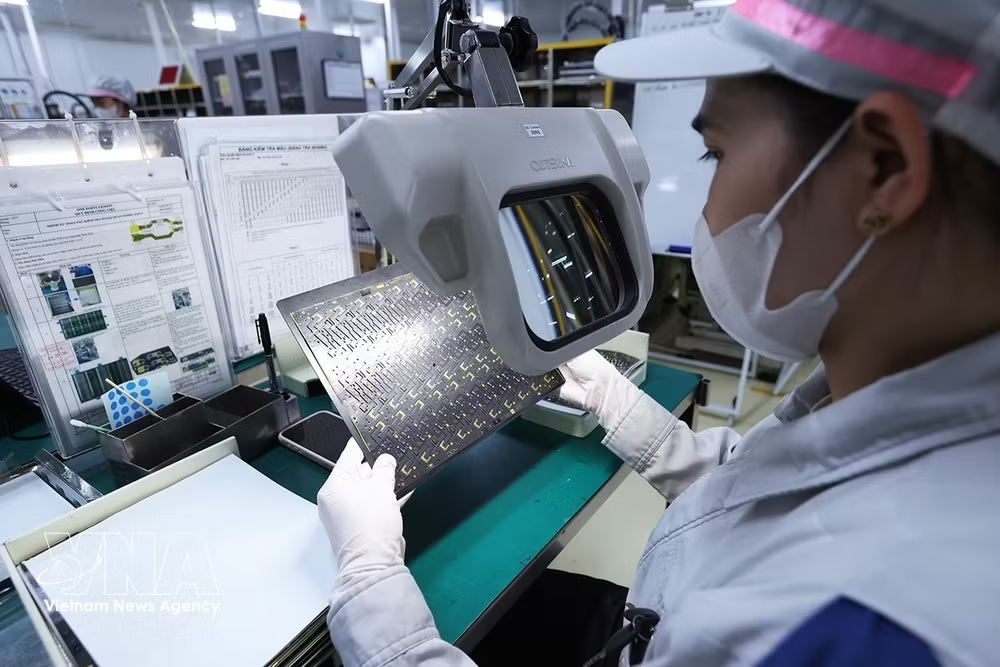
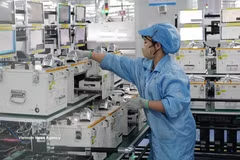
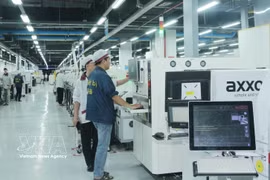
Inspecting printed circuit board (PCB) products for electronic devices using screen-assisted magnification at the factory of the Japanese-invested Mektec Manufacturing Vietnam Co., Ltd, located in Thang Long II Industrial Park of My Hao ward, Hung Yen province. (Photo: VNA)

Inspecting printed circuit board (PCB) products for electronic devices using screen-assisted magnification at the factory of the Japanese-invested Mektec Manufacturing Vietnam Co., Ltd, located in Thang Long II Industrial Park of My Hao ward, Hung Yen province. (Photo: VNA)

Alongside targets on investment volume, the resolution also focuses on improving the quality of FDI inflows and addressing longstanding shortcomings, including lower-than-expected technology transfer, limited linkages between foreign-invested and domestic firms, low localisation rates and the relatively modest participation of Vietnamese enterprises in global value chains.

To achieve these objectives, Huong said a broad range of measures would need to be implemented simultaneously, including increasing localisation rates, strengthening domestic participation in FDI supply chains and shifting investment attraction policies away from quantity-driven growth towards quality, efficiency, advanced technology, innovation and sustainable development.

“The Ministry of Finance will continue to work closely with ministries, sectors and local authorities in formulating and implementing action programmes to improve the effectiveness of attracting and utilising foreign investment, supporting the economy’s rapid and sustainable growth objectives in the coming period,” Huong said./.
VNA

See more

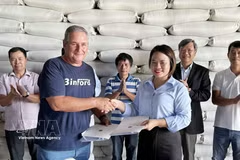
Delegates at the seminar in Bangkok on June 17. (Photo: VNA)

Thanh Hoa seeks stronger cooperation with Thai businesses

Mai Xuan Liem, Permanent Vice Chairman of the Thanh Hoa People’s Committee, said Thailand is one of the province’s important export markets, with export turnover reaching more than 12 million USD in the first five months of 2026.

Delegates press the button to officially launch the Doan Hung Industrial Park – AMATA City Phu Tho project at the conference. (Photo: VNA)

Vietnam, Thailand strengthen investment ties, smart city cooperation

Thailand is currently Vietnam's largest trading partner within ASEAN, while Vietnam ranks as Thailand's sixth-largest trading partner globally. Bilateral trade reached 22.07 billion USD in 2025, with both sides aiming to increase the figure to 25 billion USD in the coming years. Thailand also has 805 valid investment projects in Vietnam with a combined registered capital of 15.4 billion USD.

Deputy Prime Minister Nguyen Van Thang speaks at the meeting with ministries and sectors in Hanoi on June 17 to review public investment disbursement and address bottlenecks affecting ODA projects. (Photo: VNA)

Deputy PM requests faster disbursement of ODA-funded projects

As of June 15, the disbursement rate for public investment funded by external sources had reached only 9.99% of the assigned plan. Although the figure was higher than in the same period last year, it remained well below the national average. Notably, one out of eight ministries and central agencies and 13 localities had yet to disburse any allocated capital.

Sorting green-skinned pomelos for export at the processing facility of Vina T&T Group in Vinh Long province. (Photo: VNA)

Vietnamese fruits strengthen foothold in China

The expansion of fruit trade has been supported by the implementation of the Regional Comprehensive Economic Partnership (RCEP) and ongoing efforts to upgrade the China – ASEAN Free Trade Area.

Production of electronic components at DBG Technology Vietnam Co., Ltd. in Yen Binh Industrial Park, Thai Nguyen province. (Photo: VNA)

Vietnam’s trade surplus with EU expands amid economic headwinds

Trade between Vietnam and the EU maintained momentum during the January–May period, supported by the EU – Vietnam Free Trade Agreement (EVFTA) and sustained demand for key Vietnamese exports, even as the EU grappled with inflationary pressures and sluggish consumer spending.

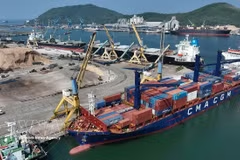
Containers are unloaded at Nghi Son International Port in Nghi Son ward, Thanh Hoa province. (Photo: VNA)

Vietnam eyes to shape national maritime industrial ecosystem

These advantages provide a strong foundation for the development of the marine economy and logistics services. As a result, the marine economy has been identified as a national strategic priority, with the coordinated development of maritime transport, seaports and shipbuilding serving as a key pillar in shaping a sustainable national maritime industrial ecosystem.