Environment protection central to Vietnam’s new development vision: Top leader

Chairing a working session on June 10 with the Government Party Committee and relevant agencies reviewing the implementation of Resolution No. 24-NQ/TW, issued by the 11th Party Central Committee, on proactively responding to climate change, strengthening natural resource management and environmental protection, the top leader emphasised that environmental protection and climate adaptation must be integrated into the broader goals of rapid and sustainable development, maintaining high economic growth over the long term, and building a modern economy driven by science and technology, innovation and digital transformation.

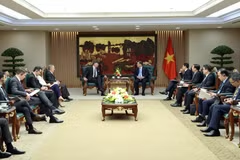
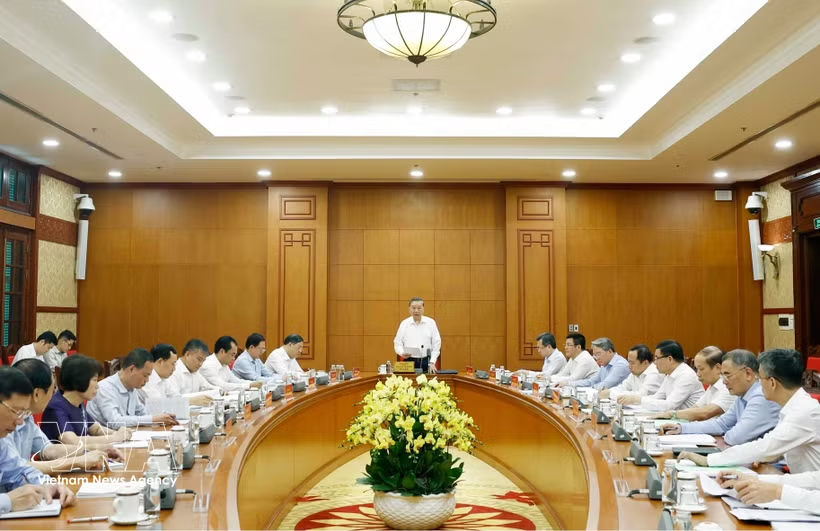
Party General Secretary and State President To Lam chairs a working session on June 10, 2026 with the Government Party Committee and relevant agencies reviewing the implementation of Resolution No. 24-NQ/TW, issued by the 11th Party Central Committee, on proactively responding to climate change, strengthening natural resource management and environmental protection. (Photo: VNA)

Hanoi (VNA) – Protecting the environment and adapting to climate change are among the key pillars of Vietnam’s new development model, Party General Secretary and State President To Lam said, stressing that investment in the environment and climate is an investment in sustainable development, public health, economic competitiveness and the nation’s future.

Chairing a working session on June 10 with the Government Party Committee and relevant agencies reviewing the implementation of Resolution No. 24-NQ/TW, issued by the 11th Party Central Committee, on proactively responding to climate change, strengthening natural resource management and environmental protection, the top leader emphasised that environmental protection and climate adaptation must be integrated into the broader goals of rapid and sustainable development, maintaining high economic growth over the long term, and building a modern economy driven by science and technology, innovation and digital transformation.

He called for a deeper shift in mindset regarding environmental protection and climate resilience, underscoring the need to move beyond traditional approaches and embrace a more forward-looking development vision.

General Secretary and President Lam affirmed that environmental protection and climate adaptation are central to the new development model outlined for the Party’s 14th National Congress. He stressed that investing in the environment means investing in the future, requiring a transition from a reactive approach to one that proactively shapes development.

This shift, he said, involves moving away from a focus on pollution treatment, damage control and passive responses towards early prevention, green growth, enhanced resilience, harmonious coexistence between people and nature, and sustainable development for future generations.

He underscored the importance of placing people at the centre of all objectives, targets and policy solutions. The ultimate goal, he noted, is not merely to meet technical standards but to ensure that citizens can live in a safe and healthy environment, with their health, lives, livelihoods and assets protected from natural disasters and climate-related risks.

Priority should be given to addressing pressing environmental challenges, including air and water pollution, solid waste and plastic waste management, pollution in traditional craft villages and industrial clusters, as well as flooding, landslides, drought and saltwater intrusion. Green transition efforts, he added, must be closely linked to social welfare and sustainable livelihoods, ensuring that vulnerable groups are not left behind.
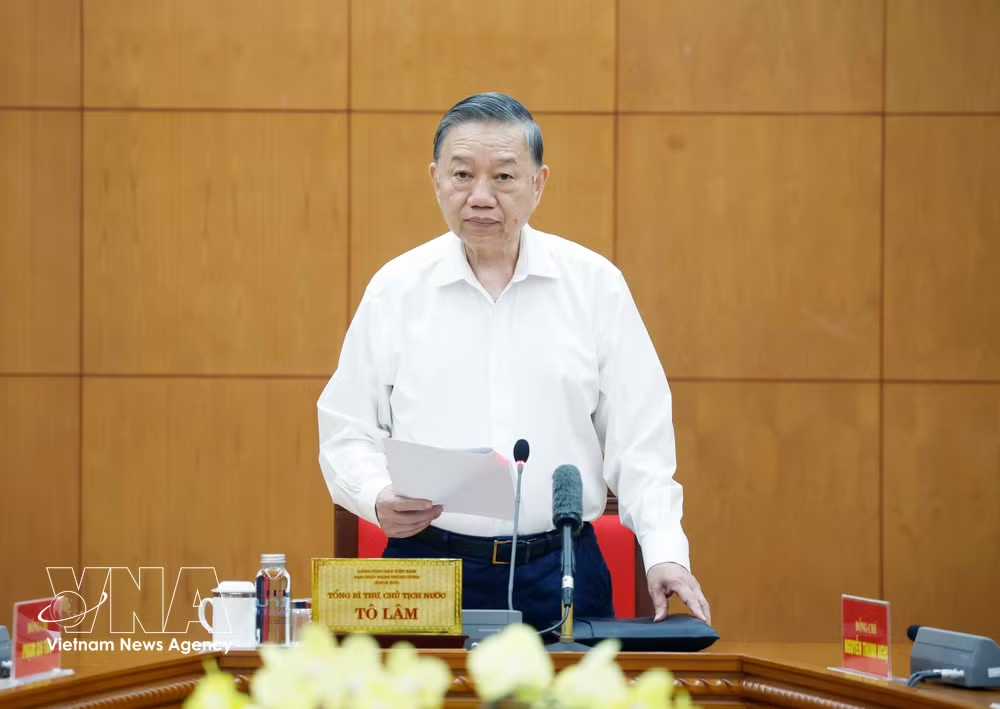
vnanet-tbt-10a.jpg
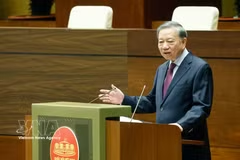
Party General Secretary and State President To Lam speaks at the meeting. (Photo: VNA)

The top leader highlighted the need to identify clearer strategic breakthroughs, particularly in institutions, science and technology, and national governance. He called for accelerated deployment of strategic technologies in line with the Politburo's Resolution No. 57, the development of a national digital database on natural resources, the environment and climate, the expansion of the carbon market, and the refinement of economic instruments for environmental and resource management.

He also stressed the importance of strengthening forecasting, early warning systems and risk governance, while shifting decisively from administrative management to modern governance based on data, technology and market mechanisms.

At the same time, he stressed the need to further refine a transparent and coherent legal framework, promote decentralisation coupled with effective oversight, and mobilise resources from society, the private sector and international partners to support green development and climate adaptation goals.

According to him, the state budget should play a leading role while creating stronger mechanisms to mobilise private-sector resources through green credit, green bonds, carbon markets, public-private partnerships and international cooperation. Resources should be allocated strategically, with priority given to environmental hotspots, vulnerable areas with critical infrastructure needs and projects capable of generating broad spillover effects.

He also called for deeper research into strategic issues related to water security, food security, energy security, mineral security, maritime security and biodiversity conservation, which should be incorporated into the broader strategy of safeguarding the nation from an early stage and from afar.

The top leader further stressed the need to elevate Vietnam’s approach to international cooperation on environmental protection and climate change.

Noting that environmental and climate issues are global in nature, he said Vietnam should continue to actively participate in international cooperation mechanisms and make the most of global knowledge, governance experience and financial resources to support environmental protection, climate adaptation and green transition efforts.

However, he emphasised that international cooperation should not be limited to receiving support. Vietnam should take a more proactive role in shaping regional and global initiatives, standards and cooperation mechanisms on environmental and climate issues, thereby contributing to the international community’s collective efforts while enhancing the country’s position, reputation and influence.

He underlined the need to ensure a balance between national interests and international responsibilities. The implementation of international commitments on environmental protection, climate adaptation and greenhouse gas emissions reduction, he noted, must take into account the specific conditions of each country and follow appropriate roadmaps and implementation pathways./.
VNA

See more

☕ Afternoon briefing on June 11

☕ Afternoon briefing on June 11

A national conference disseminating and implementing Politburo Resolution No. 06-NQ/TW, the launch of the 14th national red journey blood donation campaign, and the 2026 national high school graduation examination are among news highlights on June 11.

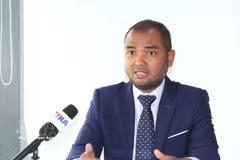
Dr. Gnel Rattha, President of the Cambodia – Russia Business Association and an expert in geopolitics and international economics, grants an interview to the Vietnam News Agency. (Photo: VNA)

Cambodian expert hails AFF 2026 as milestone in multilateral party diplomacy

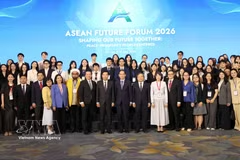
AFF 2026 is a testament to Vietnam’s ability to pursue a foreign policy of independence, self-reliance, and deeper international integration. The forum’s agenda also demonstrated the host country’s organisational capacity in broadening dialogue beyond the government level, bringing together representatives of major ASEAN cities, youth groups, and the private sector, said Dr. Gnel Rattha, President of the Cambodia–Russia Business Association.

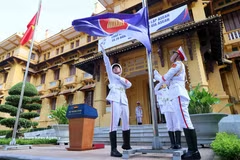
Flag-raising ceremony marking the 57th anniversary of the founding of the Association of Southeast Asian Nations (ASEAN), organised by the Vietnamese Ministry of Foreign Affairs in Hanoi on August 8, 2024. (Photo: VNA)

AFF 2026 potential to become an incubator of ideas for ASEAN’s future agenda: expert

Collins Chong Yew Keat, a strategic, security and foreign affairs analyst at the Universiti Malaya, said that Vietnam’s decision to organise the forum was highly timely, as the bloc is currently facing a range of interconnected challenges, from major-power competition, maritime tensions and supply chain disruptions to non-traditional issues such as climate change and technological transformation.

Party General Secretary and State President To Lam speaks at the national conference held on June 11 to disseminate and implement Politburo Resolution No. 06-NQ/TW. (Photo: VNA)

Top leader highlights strategic role of foreign affairs in new development era

With the determination of the entire political system, Resolution No. 06 will soon be translated into practical outcomes, enabling foreign affairs to fully perform its pioneering and strategic role in advancing Vietnam’s aspiration to become a developed, independent, self-reliant and self-strengthening nation in the new era, said top leader To lam.

The Vietnam–Cambodia friendship monument is inaugurated on June 10 in Pursat province of northern Cambodia (Photo: VNA)

New Vietnam–Cambodia friendship monument inaugurated in Pursat province

The Vietnam–Cambodia Friendship Monument stands as a symbol of the solidarity and friendship between the two countries, serving as a historical and cultural landmark that pays tribute to Vietnamese volunteer soldiers and experts who fought alongside Cambodian forces and people against common enemies for peace, independence, and freedom.

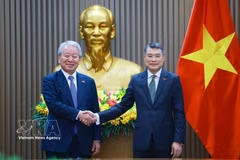
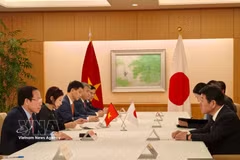
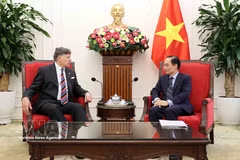
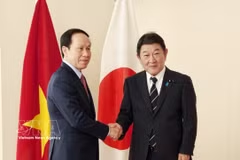
Deputy Prime Minister Le Tien Chau meets with Japanese Foreign Minister Motegi Toshimitsu on June 10. (Photo: VNA)

Vietnam, Japan seek to deepen all-round relations

Meeting with Japanese Foreign Minister Motegi Toshimitsu on June 10, Deputy PM Le Tien Chau thanked Japan for its effective cooperation and significant contributions to Vietnam’s socio-economic development over the years, expressing support for Japan’s increasingly active role in regional and global affairs through initiatives in digital transformation and energy security.

☀️ Morning digest on June 11

☀️ Morning digest on June 11

Party General Secretary and State President To Lam's reception for Timor-Leste PM Kay Rala Xanana Gusmão, Standing Deputy PM Pham Gia Tuc's meeting with US Deputy Secretary of State Christopher Landau, and the conclusion of third ASEAN Future Forum are among news highlights on June 10 evening.

Foreign Minister Le Hoai Trung meets with UK Parliamentary Under-Secretary of State Seema Malhotra in Hanoi on June 10, 2026, as part of the British official’s visit to Vietnam. (Photo: Ministry of Foreign Affairs)

Vietnam, UK seek to lift bilateral trade to 10 billion USD

At the meeting, Foreign Minister Le Hoai Trung thanked the UK for its high-level participation in the ASEAN Future Forum and reaffirmed Vietnam’s support for stronger ASEAN–UK ties. Marking five years of the ASEAN–UK Dialogue Partnership, he stressed Vietnam’s determination to effectively fulfil its role as ASEAN Coordinator for relations with the UK for the 2024–2027 period.

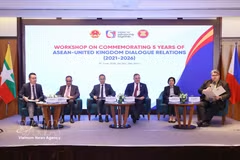
Delegates at the workshop on commemorating 5 years of ASEAN - UK Dialogue Relations in Hanoi on June 10 (Photo: VNA)

Vietnam reaffirms commitment to advancing ASEAN ties with New Zealand, UK

The ASEAN-New Zealand Forum on Subregional Cooperation and a workshop marking the fifth anniversary of ASEAN-UK Dialogue Partnership relations (2021-2026) were hosted by Vietnam’s Ministry of Foreign Affairs in its capacity as coordinator of ASEAN’s relations with New Zealand and the UK for 2024-2027.

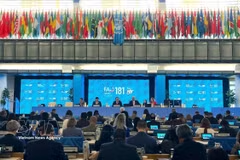
The 181st Session of the FAO Council takes place in Rome, Italy, from June 8–12, 2026. (Photo: VNA)

Vietnam a model for effective South-South cooperation: FAO

Vietnam’s participation in the 181st Session of the FAO Council in Italy demonstrates its active and responsible role in multilateral food and agriculture mechanisms, while reaffirming the country’s commitment to addressing food security challenges, promoting sustainable agricultural development, adapting to climate change and strengthening international cooperation in agrifood system transformation.

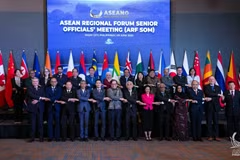
Delegates at ASEAN regional Forum Senior Officials' Meeting in the Philippines on June 9 (Photo: The Ministry of Foreign Affairs)

ASEAN must remain central to regional dialogue, cooperation, trust-building: Vietnamese diplomat

Vietnam will continue working with ASEAN member states and China to implement the Declaration on the Conduct of Parties in the East Sea (DOC) and accelerate negotiations toward an effective and substantive Code of Conduct (COC) consistent with international law, especially the 1982 United Nations Convention on the Law of the Sea (UNCLOS), said Deputy Foreign Minister Dang Hoang Giang.

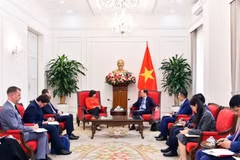
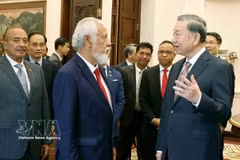
Timor-Leste Prime Minister Kay Rala Xanana Gusmão and General Secretary of the Communist Party of Vietnam and State President To Lam during a farewell meeting on June 10 ahead of the Timorese leader’s departure for home. (Photo: VNA)

Timor-Leste PM wraps up Vietnam visit

Vietnam and Timor-Leste possess substantial potential and complementary strengths to broaden cooperation for the benefit of their people and to contribute to a stable, resilient and sustainable region.

Politburo member and Permanent member of the Communist Party of Vietnam (CPV) Central Committee's Secretariat Tran Cam Tu speaks at the conference (Photo: VNA)

Senior Party official commends Central Military Commission’s reform, innovation efforts

Military units at all levels have carried out organisational reforms in a coordinated manner, particularly in enhancing the capacity of military command units at the commune, ward and special administrative zone levels. Difficulties arising during the implementation of the two-tier local administration model were promptly addressed, helping ensure the fulfilment of defence and military tasks.