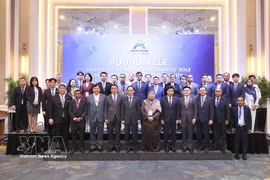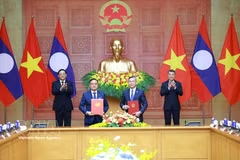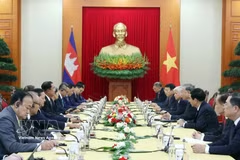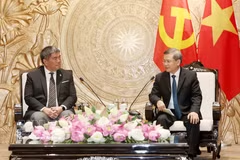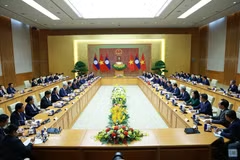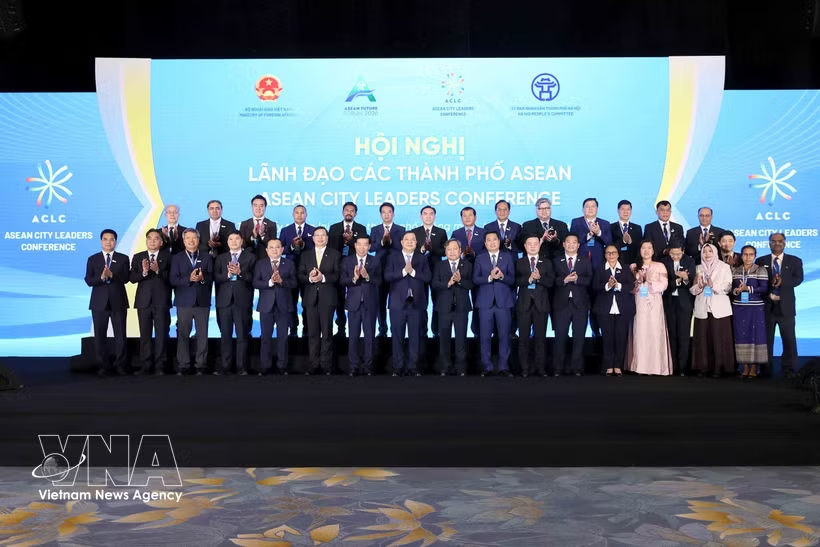
Hanoi (VNA) – Leaders across ASEAN member states gathered in Hanoi on June 8 for the ASEAN Cities Leader Conference 2026 held under the theme 'Driving the future through smart, sustainable and connected cities” as part of the 3rd ASEAN Future Forum hosted by Vietnam.
In his opening speech, Chairman of the Hanoi People’s Committee Vu Dai Thang emphasised that the presence of delegates at the event reflects ASEAN’s spirit of solidarity, cooperation, and shared aspiration to build sustainable, prosperous, and people-centred cities. He noted that ASEAN is among the world’s most dynamic regions, where rapid urbanisation has turned cities into key hubs of economic growth, innovation, and regional connectivity.
However, he pointed out that ASEAN cities are facing growing common challenges, including climate change, infrastructure pressures, environmental pollution, demands for digital transformation, and the need to improve the quality of life for citizens.
Against this backdrop, he stressed that strengthening cooperation among ASEAN cities is not only an objective necessity but also an important momentum for realising the vision of a resilient, innovative, and sustainable ASEAN Community.
The conference provides a platform for regional cities to exchange experiences, share best practices and initiatives and develop new cooperation models to address common challenges while harnessing opportunities created by the 4th Industrial Revolution and the digital era, he stated.
Hanoi identifies digital transformation as a key driver of development, focusing on building a digital government, digital economy, and digital society; promoting the application of artificial intelligence, big data, and advanced technologies to enhance urban governance efficiency, improve the quality of public services, and create a more enabling environment for citizens and businesses.
From a regional cooperation perspective, Deputy Minister of Foreign Affairs Nguyen Manh Cuong stated that the goals of smart cities, sustainable development, and people-centred approaches can only be more effectively realised through strengthening connectivity and cooperation among ASEAN cities.
He noted that the conference is held for the first time within the framework of the AFF, a Vietnam’s initiative aimed at fostering policy dialogue and contributing to the ASEAN Community-building process.
The event also marks the first dialogue among ASEAN cities' leaders under the AFF, creating a platform for urban authorities to share experiences, identify common solutions and lay the groundwork for practical future cooperation, Cuong added.
As cities become increasingly involved in addressing global issues such as digital transformation, green growth and climate change adaptation, cooperation among cities is emerging as an important form of “urban diplomacy,” complementing cooperation among ASEAN member countries and making practical contributions to the building of the ASEAN Community, Cuong said.
Reaffirming the importance of local-level diplomacy in Vietnam’s development-oriented foreign policy, he pledged continued support from the Ministry of Foreign Affairs in helping localities expand international partnerships, mobilise external resources and advance initiatives generated by the conference.
Delegates expressed their hope that discussions would produce practical recommendations and initiatives on smart urban governance, AI applications, citizen-centred digital transformation, green urban development and climate change adaptation, while opening new avenues for cooperation among ASEAN cities.
The conference is expected to strengthen links among urban centres across the region, promote experience sharing in governance; cooperation in trade, investment, and innovation; and people-to-people exchanges, thus contributing to building of a peaceful, stable, resilient and sustainable ASEAN Community./.