Ho Chi Minh City (VNA) – Ho Chi Minh City is looking to transit-oriented development (TOD) as a key solution to reorganise urban space, unlock land resources and create new growth drivers under its master plan for 2025–2050, with a 100-year vision.
The plan, approved by the municipal People's Council, envisions a multi-polar and multi-centre urban model, with urban railways serving as its backbone.
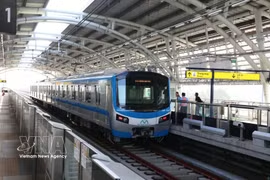
Urban railways are identified as the main mode of passenger transport and a tool for shaping urban development under the TOD model. By 2050, the city aims to complete 960km involving eight urban railway lines, along with approximately 450km of light rail and tram networks.
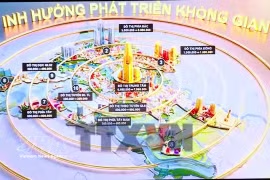
The city has adopted resolutions on railway route adjustments and TOD planning, based on mechanisms approved by the National Assembly. TOD areas cover railway stations, depots and surrounding zones within a maximum radius of 1,000 metres. Land-use coefficients in some functional areas may be increased by up to 1.5 times.
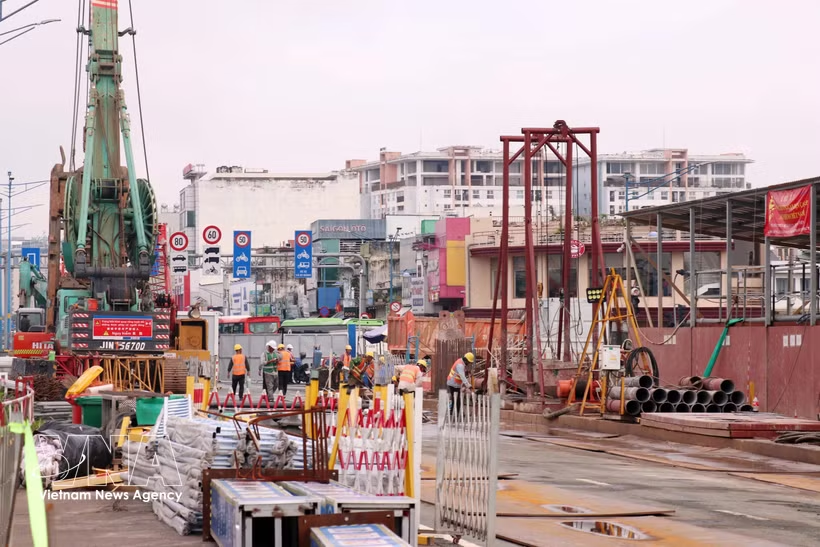
Currently, the city is prioritising five TOD areas along Metro Line No. 2, running from Ben Thanh to Tham Luong, covering approximately 939 hectares.
For the Ben Thanh–Suoi Tien metro line, the city is seeking approval for the boundaries of eight TOD areas linked to 12 stations. Other priority areas include the Thu Thiem station complex, covering around 246.44 hectares, and two areas linked to major projects at Hoa Binh Park station on Metro Line No. 3 and Thiec Dua station on the Thu Thiem–Long Thanh railway, with a combined area of approximately 221.3 hectares.
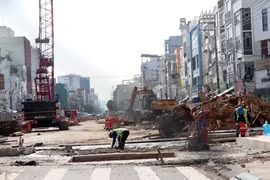
However, implementation faces several challenges. Many existing zoning plans were prepared before station locations were determined, while some legally approved projects are located around planned stations. Railway routes and station locations on several lines have yet to be finalised, potentially resulting in overlapping TOD boundaries. Limited land availability, high compensation costs and pressure on existing technical infrastructure also complicate development.
Duong Thao Hien, Deputy Director of the municipal Department of Planning and Architecture, said the city will prioritise public land, former warehouses and factories with expired leases, and land allocated to delayed projects. Urban upgrading would be prioritised for existing residential areas.
Alongside planning, mechanisms for mobilising land resources and developing underground space are essential to advancing TOD.
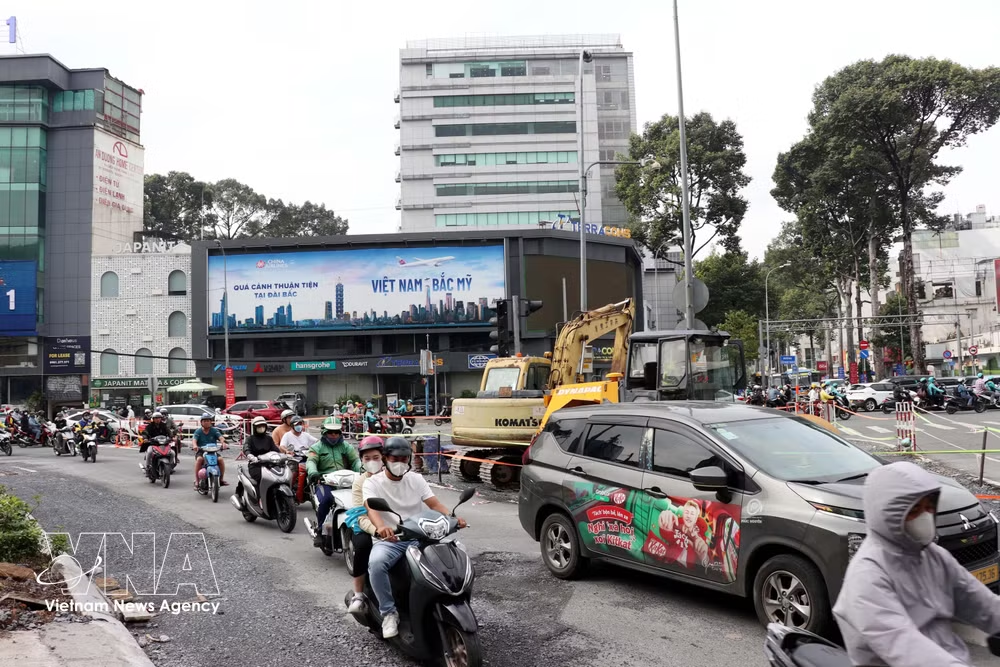
Under special mechanisms and the Law on Urban Development, the city can streamline investment procedures, implement certain steps simultaneously and promote the use of underground space.
Notably, it is allowed to retain 100% of revenue from TOD land development for reinvestment in railway projects and related transport infrastructure.
Bui Xuan Nguyen, Deputy Director of the Investment Preparation Board under the Ho Chi Minh City Management Authority for Urban Railways, said two municipal People's Council resolutions on underground space have created a foundation for tapping its development potential.
The Ben Thanh transport hub and the nearly 3km corridor connecting Ben Thanh with Thu Thiem offer considerable development opportunities, he noted.
Plans are being prepared for a 1:500-scale zoning scheme covering the entire Ben Thanh underground area, connecting it with September 23 Park, Ben Thanh Market and nearby shopping centres, to develop an underground commercial and service hub.
Initially, Ben Thanh, Tan Son Nhat and Thu Thiem have been identified as three major hubs linking urban railway lines with underground development.
According to the authority, the new mechanisms are also expected to facilitate investor participation in TOD projects./.